The storm doesn't have to hit your house to cause a serious problem.
A hurricane can knock out power miles away from the coastline. It can shut down roads, interrupt deliveries, take down cell towers, and leave neighborhoods without electricity for hours or even days.
And when the lights go out, modern life gets inconvenient very quickly.
No Wi-Fi.
No working refrigerator.
No charging your phone.
No lights.
Maybe no air conditioning or heating.
The good news?
You don't need a bunker or a garage full of expensive equipment.
You need a simple plan.
This guide shows you what to do before a hurricane-related power outage, what to keep ready, and how to get through the first 24 hours without unnecessary stress.
Why the First 24 Hours Matter
Most people think about hurricane preparation in terms of food and water.
Those are obviously important.
But there is another problem people often underestimate:
Electricity controls almost everything around you.
Your phone needs electricity.
Your lights need electricity.
Your internet router needs electricity.
Your refrigerator needs electricity.
Even some ways of getting information about the storm depend on charged devices.
That's why your emergency preparation should focus on four basic things:
Power.
Light.
Information.
Communication.
If you can keep those four things working, the first hours of an outage become much easier to manage.
Before the Storm: Charge Everything
Don't wait until the weather gets bad.
If a hurricane or major storm is expected to affect your area, charge your essential devices while the grid is still working.
Start with:
-
Smartphone
-
Power banks
-
Tablets
-
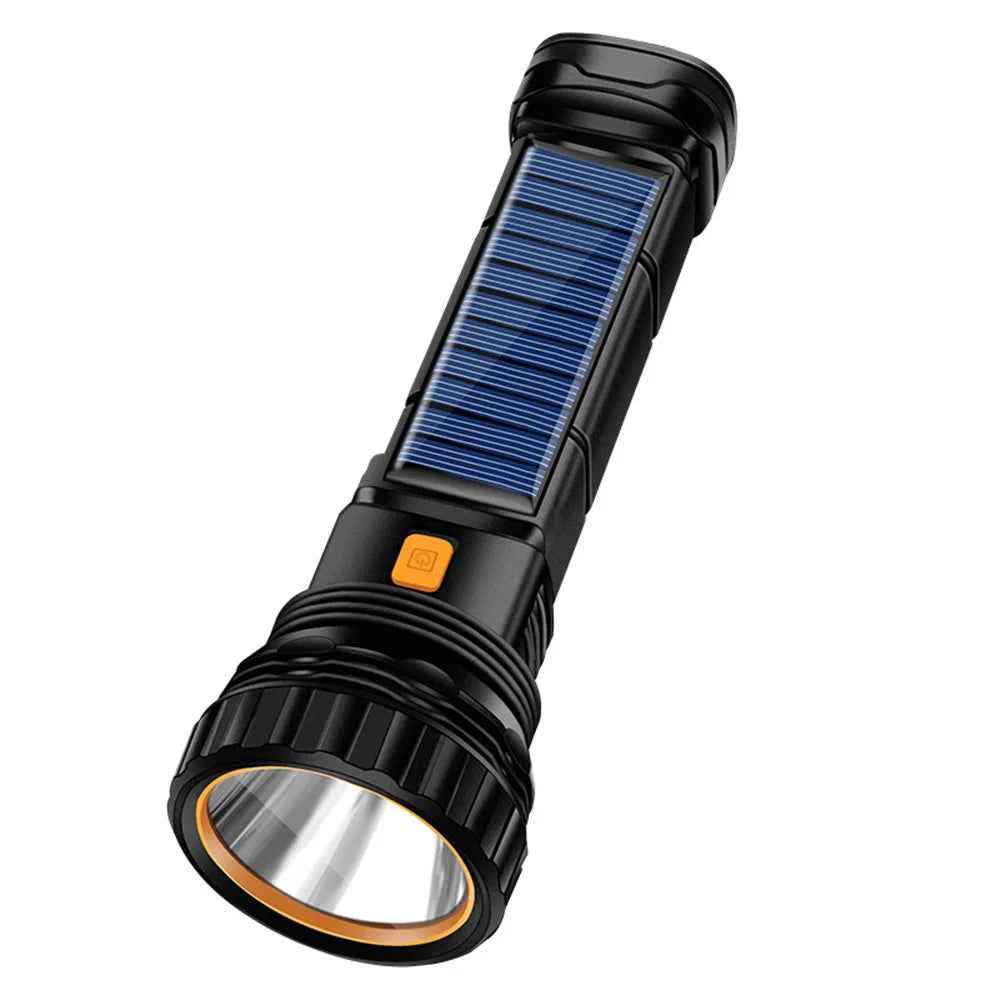
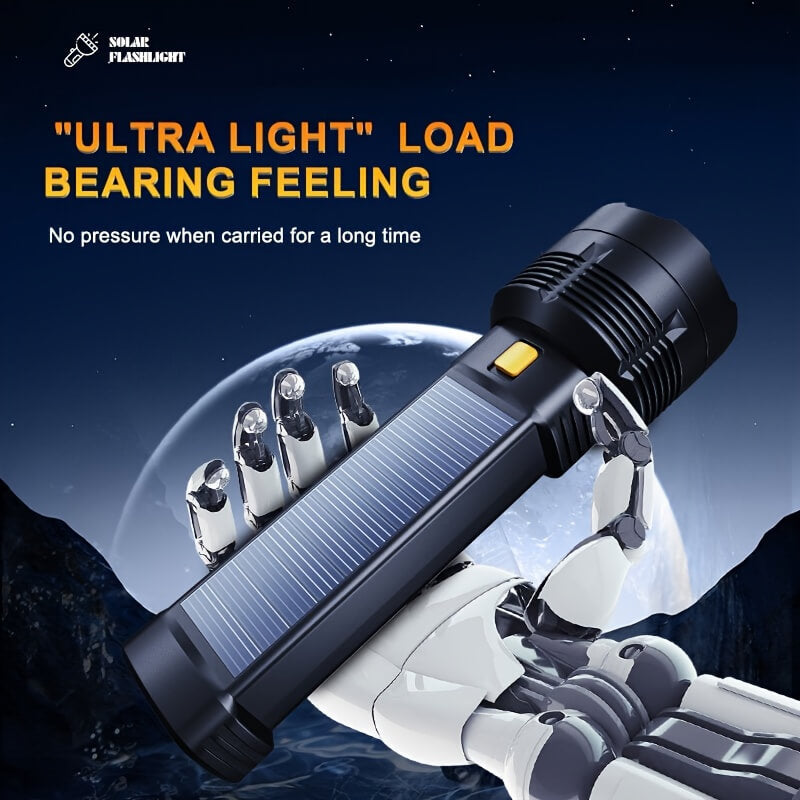
Rechargeable flashlights
-
Headlamps
-
Emergency radios
-
Portable batteries
-
Other essential electronics
It sounds obvious.
But one of the worst times to discover that your power bank is sitting at 12% is when the electricity has already gone out.
Your phone is more important than entertainment
During an emergency, your phone can become your:
-
Weather information source
-
Communication device
-
GPS
-
Emergency contact list
-
Camera
-
Flashlight
-
News source
That makes keeping it powered one of your simplest preparedness priorities.
Keep a Large Backup Power Source Ready
A small power bank can be useful for a normal day.
During a prolonged outage, having more capacity gives you more flexibility.
The V2 Solar-Beast Powerbank 50,000 mAh is designed for situations where access to conventional power may be limited.
It combines a large 50,000 mAh battery with built-in retractable USB-A, USB-C, Micro-USB and Lightning cables.
That means you don't have to search through drawers for the right cable when you need to charge a device.
It also supports solar charging, giving you an additional way to replenish power when sunlight is available.
Important: solar charging should be treated as a backup charging method, not as an instant replacement for a wall outlet. Charging speed depends on sunlight, weather, positioning and other conditions.
The important idea is simple:
Store power before the outage. Replenish it when you can.
Don't Rely on One Light
When the electricity disappears, the first thing you'll probably notice is the darkness.
Your phone has a flashlight.
Great.
But using your phone as your primary light source means you're also using the battery you may need for communication.
A better setup is to have dedicated lighting.
Ideally, keep at least two different types available.
1. A headlamp
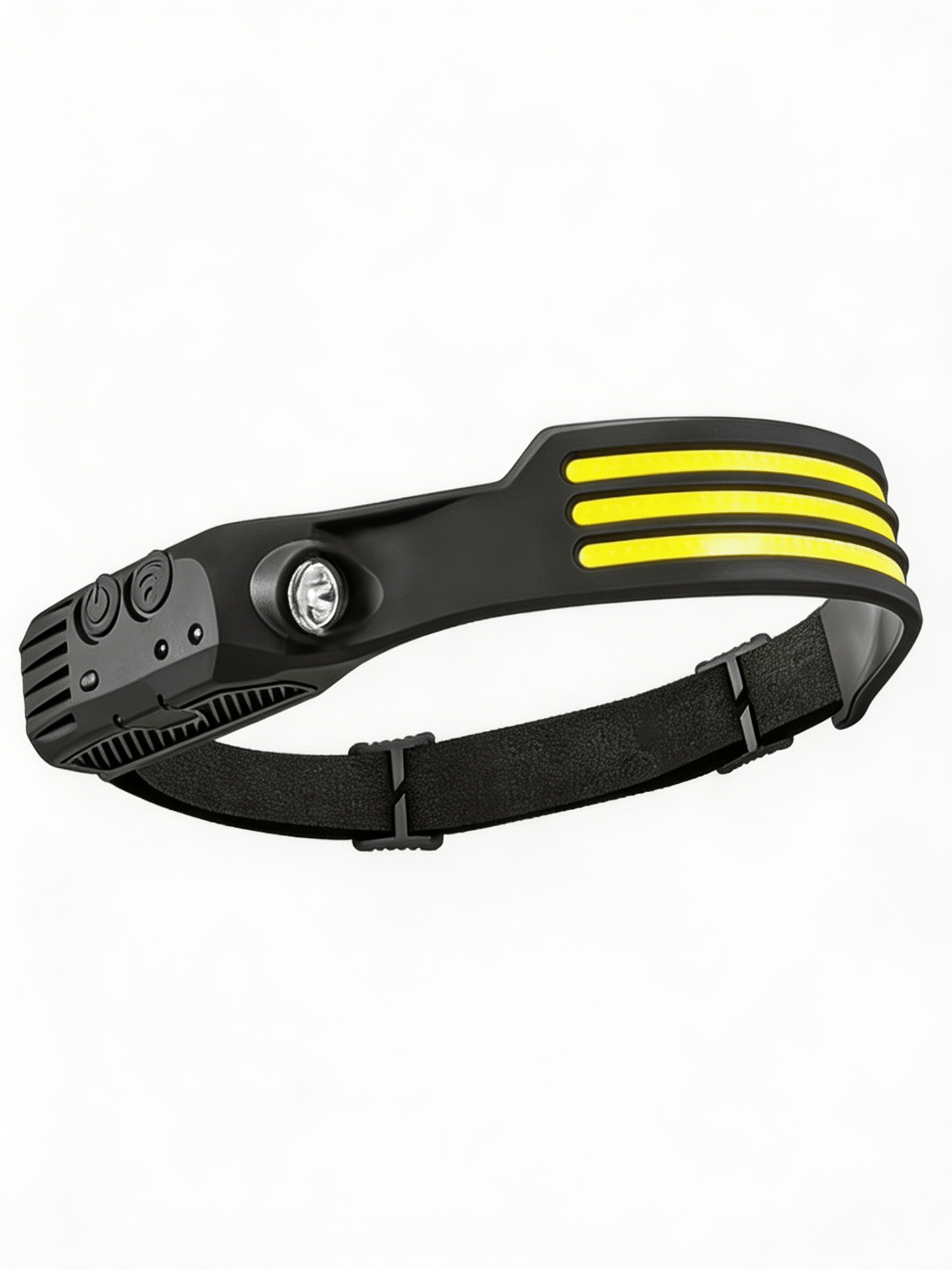
A headlamp is useful because your hands remain free.
You can:
-
Move around the house
-
Check your electrical panel
-
Search through supplies
-
Carry water
-
Work with tools
-
Walk outside when safe
-
Deal with equipment
The Night Forge Headlamp is built around exactly this type of hands-free lighting.
2. A lantern
A lantern serves a different purpose.
Instead of illuminating one small area, it can provide broader lighting around a room, campsite, vehicle or outdoor area.
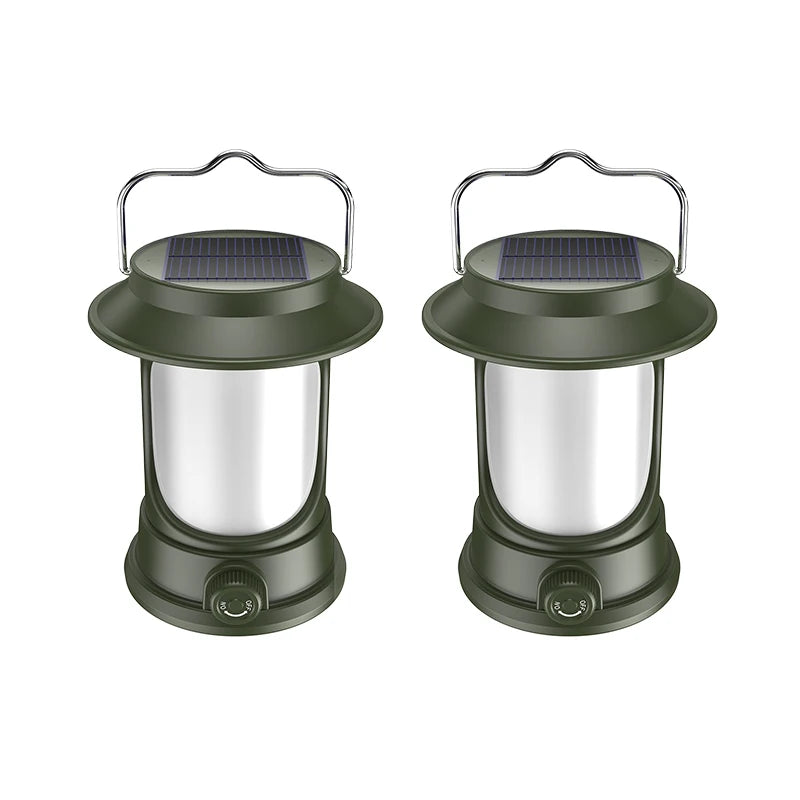
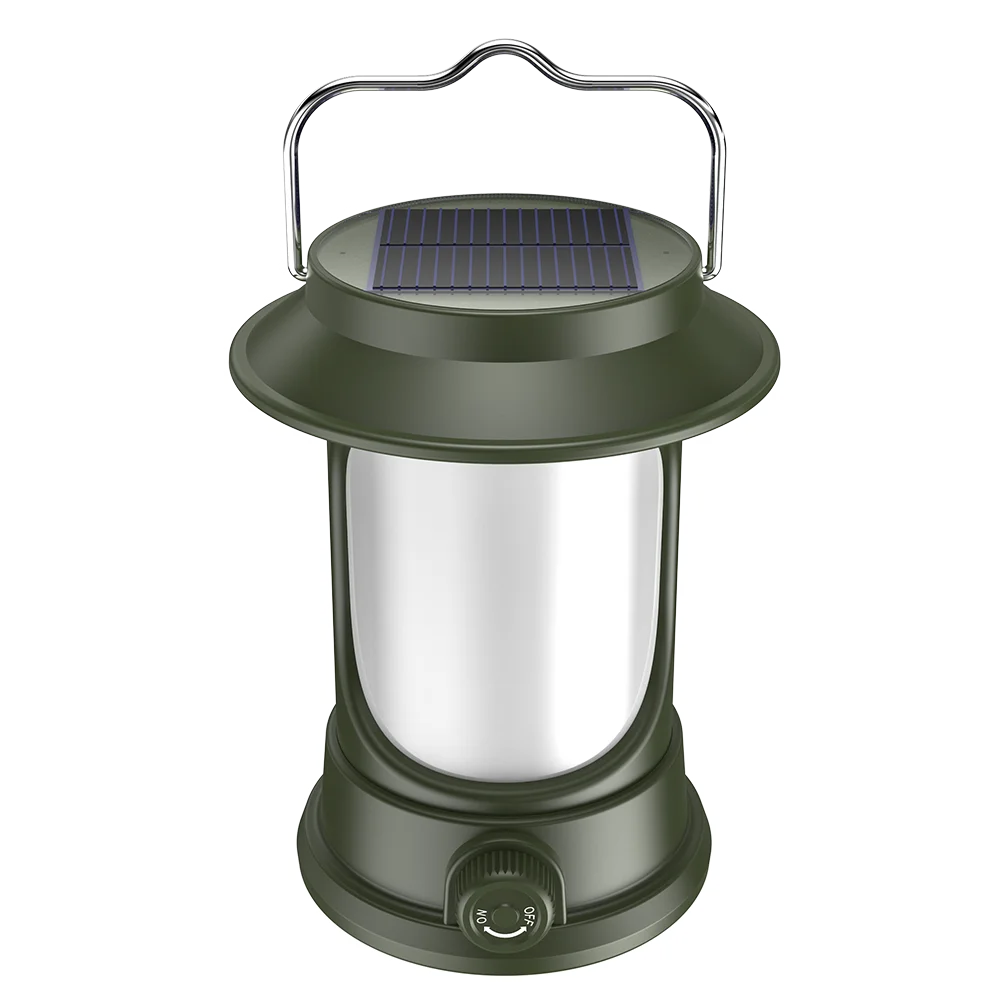
The Light4Future Rechargeable Waterproof Solar Lantern can be charged through USB and solar power and is designed for outdoor and emergency situations.
Think of it this way:
Headlamp = movement and work.
Lantern = area lighting.
Having both gives you more flexibility than trying to make one device do everything.
Keep an Emergency Radio Ready
Your smartphone isn't guaranteed to work during a major storm.
Cellular networks can become overloaded or unavailable.
Internet access can disappear.
That's why an emergency radio can be a useful second source of information.
A battery-powered or hand-crank radio can help you receive important weather and emergency information when your normal communication options aren't available.
The Portable Survival Emergency Radio is another piece of equipment that fits naturally into a hurricane preparedness setup.
Keep spare batteries with your radio if it uses replaceable batteries.
And test it before an emergency.
You don't want your first attempt at using emergency equipment to happen when the storm is already outside.
Have Enough Water Before the Store Shelves Empty
Water should be one of the first things on your hurricane checklist.
Don't wait for the weather forecast to become an emergency announcement.
Keep drinking water available for everyone in your household.
Remember:
People aren't the only ones who need water.
If you have pets, include them in your calculation.
Also consider water for basic hygiene if your local water supply is affected.
A power outage and a water outage aren't necessarily the same thing, but severe weather can create multiple problems at once.
Preparation works better when you plan for the combination rather than just one problem.
Fill Your Refrigerator Before the Power Goes Out
This sounds strange.
But your refrigerator becomes part of your emergency plan during an outage.
Before a major storm:
-
Make sure your refrigerator is operating normally.
-
Freeze items that can safely be frozen.
-
Keep the refrigerator and freezer doors closed during an outage.
-
Know which foods you can eat without cooking.
-
Have shelf-stable food available.
Don't build your entire emergency plan around being able to cook.
You may not have electricity.
You may not have gas.
And you may not want to open your refrigerator repeatedly just to look for something to eat.
Build a No-Cook Food Supply
You don't need a year's supply of food.
For the first day or two, focus on foods that are:
-
Shelf stable
-
Easy to eat
-
Calorie dense
-
Familiar
-
Easy to store
Examples include:
-
Protein bars
-
Nuts
-
Crackers
-
Peanut butter
-
Dried fruit
-
Canned foods
-
Ready-to-eat meals
And don't forget a manual can opener.
A cupboard full of canned food isn't particularly helpful if the electric can opener doesn't work.
Protect Your Phone Battery
Once the power goes out, your phone battery becomes a resource.
Treat it like one.
Reduce unnecessary battery consumption.
You can:
-
Lower your screen brightness
-
Enable Low Power Mode
-
Turn off Bluetooth when you don't need it
-
Avoid streaming video
-
Close unnecessary apps
-
Use Wi-Fi only when available and useful
-
Avoid constantly checking your battery percentage
But there's an even simpler strategy:
Don't use your phone as entertainment during an emergency.
You may need that battery later.
Keep Your Emergency Gear Together
This is one of the most overlooked parts of preparedness.
Having the right equipment isn't enough.
You need to know where it is.
Imagine the power goes out at 10:30 PM.
You open a closet.
Nothing.
You search the garage.
Nothing.
You eventually find your flashlight in the car.
But the batteries are dead.
Now imagine the alternative.
You have one clearly marked emergency bag containing:
-
Power bank
-
Headlamp
-
Flashlight
-
Radio
-
Charging cables
-
First aid supplies
-
Batteries
-
Emergency documents
-
Basic tools
You know exactly where it is.
That's preparedness.
Your Emergency Bag Doesn't Have to Be Huge
A good emergency bag isn't about carrying everything you own.
It's about carrying the things that solve the most important problems.
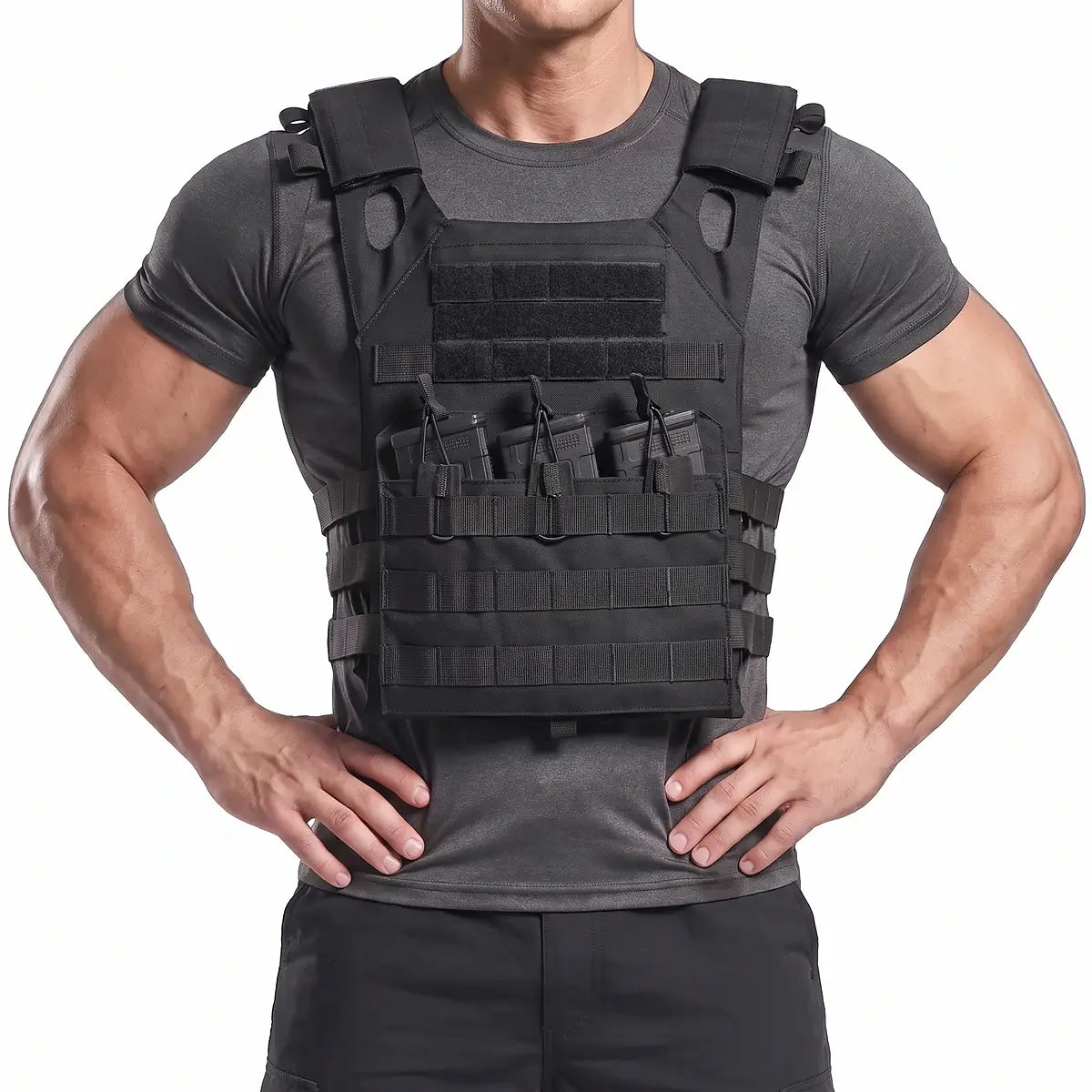
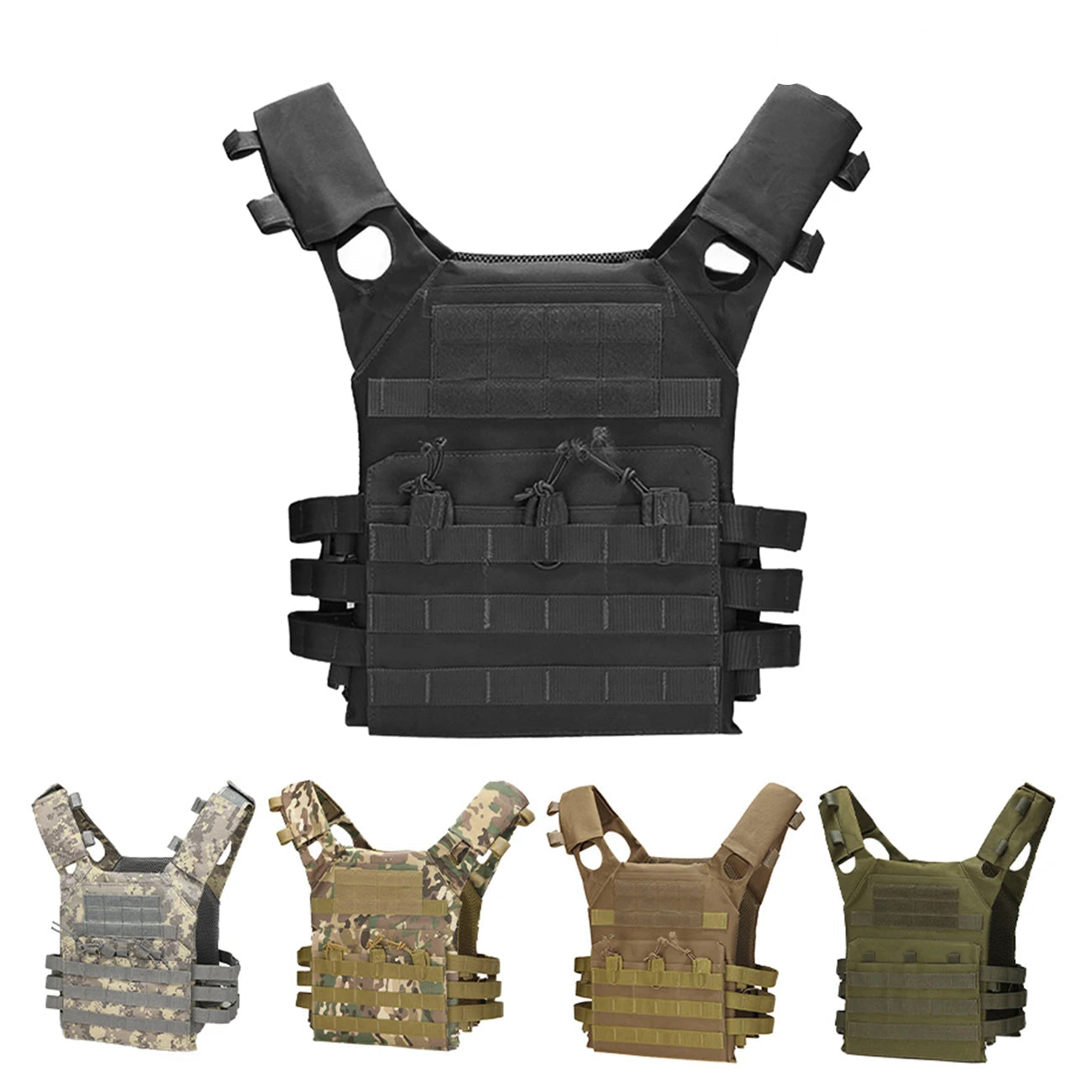
A compact bag such as the S4F Tactic Chest Pack can be useful for keeping smaller essential items organized and accessible.
You can use it for things like:
-
Flashlight
-
Power bank
-
Charging cables
-
Small first aid supplies
-
Multi-tool
-
Batteries
-
Emergency documents
-
Personal essentials
The goal is simple:
If you suddenly need to leave the house, you know exactly where your most important small items are.
What About Lighting Outside?
If conditions are safe and you need to move around outside, visibility becomes important.
A storm can create:
-
Fallen branches
-
Standing water
-
Debris
-
Damaged roads
-
Downed power lines
-
Poor visibility
Never approach downed power lines.
Stay away from flooded areas and follow local emergency instructions.
If you need to move around your property after conditions have improved, dedicated outdoor lighting can make navigation easier.
A waterproof solar lantern is particularly useful because it doesn't depend entirely on the electrical grid.
Don't Forget Your Car
A hurricane emergency doesn't necessarily happen while you're sitting at home.
You could be:
-
Driving home from work
-
Traveling
-
Visiting family
-
Camping
-
Running errands
-
Stuck in traffic
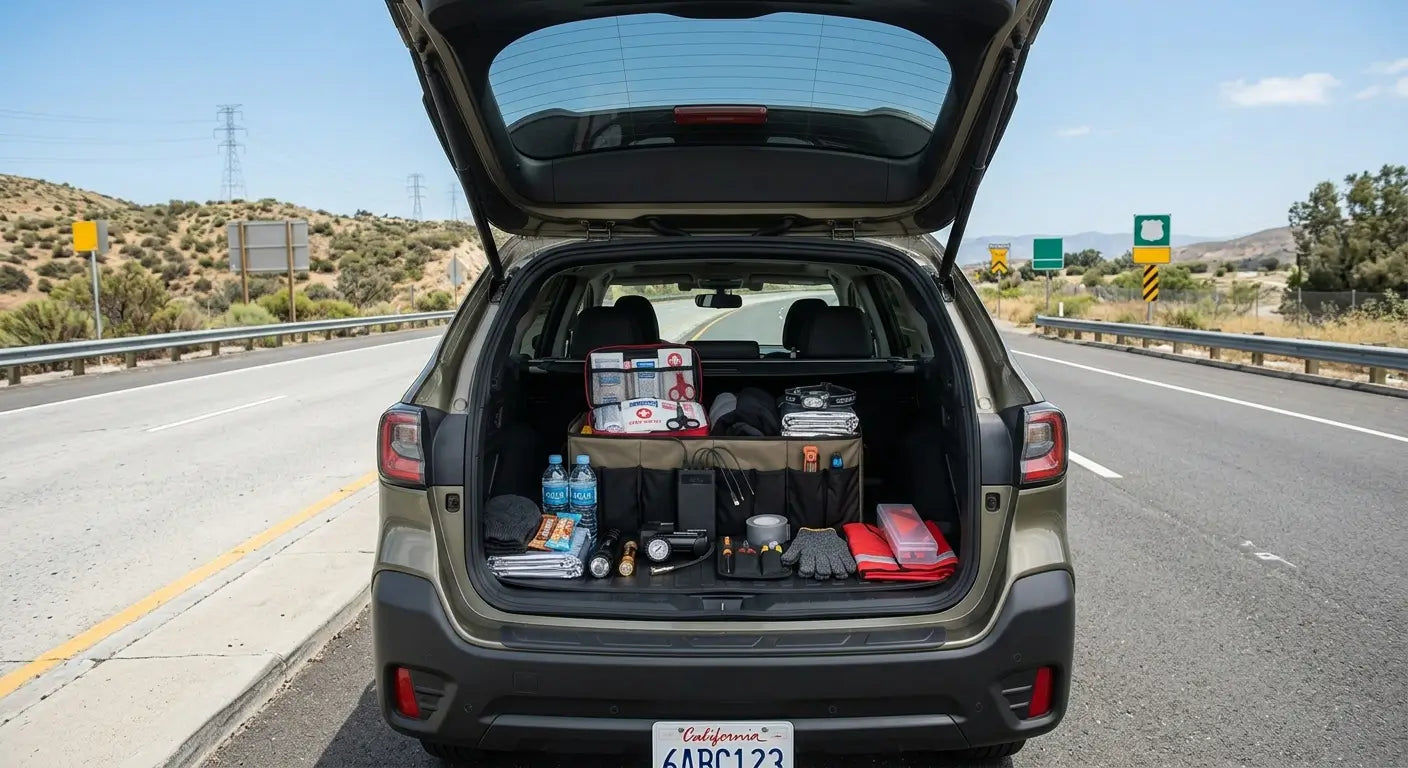
That's why your vehicle should have its own basic emergency supplies.
At minimum, consider:
-
Phone charging cable
-
Backup power bank
-
Flashlight
-
Headlamp
-
Drinking water
-
Non-perishable snacks
-
First aid kit
-
Jumper cables or jump starter
-
Tire equipment
-
Work gloves
-
Emergency blanket
-
Reflective vest
-
Basic tools
-
Emergency cash
Your car can become your temporary shelter or communication point if you are stranded away from home.
For a more complete vehicle setup, see our guide:
What Should You Keep in Your Car for Emergencies?
The 24-Hour Hurricane Power Outage Checklist
If the power suddenly goes out, don't panic.
Work through the basics.
First 15 minutes
☐ Check whether the outage is local or widespread
☐ Check official emergency information
☐ Charge devices if electricity is still available
☐ Locate your emergency kit
☐ Turn off or unplug sensitive electronics if appropriate
☐ Avoid opening the refrigerator unnecessarily
First hour
☐ Get your headlamp and lantern ready
☐ Check your phone battery
☐ Check your backup power
☐ Turn on your emergency radio
☐ Check on family members or neighbors where appropriate
☐ Make sure everyone knows where the emergency supplies are
First 6 hours
☐ Conserve phone battery
☐ Keep refrigerator/freezer doors closed
☐ Use stored water and food
☐ Monitor official weather information
☐ Avoid unnecessary travel
☐ Check for hazards around your property only when conditions are safe
After 12 hours
Now start thinking beyond the immediate inconvenience.
How much water do you have?
How much food?
How much battery power remains?
Is your phone still connected?
Do you have enough lighting for the night?
Do you need to make arrangements for children, pets, elderly family members or anyone with special needs?
This is where preparation really starts paying off.
What You Should NOT Do During a Power Outage
Some mistakes can make a bad situation worse.
Don't use a generator indoors
Never operate a fuel-burning generator inside your home, garage or another enclosed space.
Carbon monoxide can be deadly.
Don't touch downed power lines
Stay well away and report them to the appropriate authorities or utility company.
Don't assume every outage will last 20 minutes
Prepare for the possibility that restoration could take much longer.
Don't waste your phone battery
You may need it for emergency communication later.
Don't wait until the last minute to prepare
Once a major storm is approaching, stores can become crowded and supplies can disappear quickly.
The Simple Hurricane Power Setup
You don't need dozens of gadgets.
Start with these:
🔋 Power
V2 Solar-Beast 50,000 mAh Powerbank
Keep it charged and ready.
🔦 Hands-Free Lighting
Useful for moving and working when your hands need to stay free.
🏮 Area Lighting
Useful for illuminating a room, campsite, vehicle or outdoor area.
📻 Information
Portable Survival Emergency Radio
A backup way to receive important information when normal communication becomes unreliable.
🎒 Organization
Useful for keeping smaller emergency essentials together and accessible.
You don't necessarily need all of them.
The right setup depends on your household, location, climate and personal needs.
A Hurricane Doesn't Have to Become a Crisis
The biggest mistake people make with emergency preparedness is waiting for the emergency itself.
You don't need to become a hardcore prepper.
You don't need a bunker.
You don't need thousands of dollars of equipment.
You simply need to remove some of the uncertainty before the storm arrives.
Have water.
Have food.
Have light.
Have backup power.
Have a way to receive information.
Know where your emergency equipment is.
And have a plan for what you'll do if the electricity stays off longer than expected.
Because when the power goes out, the people who prepared aren't necessarily the people with the most equipment.
They're the people who already know what to do.
Your 24-Hour Hurricane Checklist
Before the next major storm, make sure you can answer "yes" to these questions:
☐ Is my phone fully charged?
☐ Is my power bank charged?
☐ Do I have a flashlight?
☐ Do I have a headlamp?
☐ Do I have a lantern?
☐ Do I have an emergency radio?
☐ Do I have enough drinking water?
☐ Do I have food that doesn't require electricity?
☐ Do I have a first aid kit?
☐ Do I have essential medication?
☐ Do I have batteries or alternative charging options?
☐ Do I have supplies for pets?
☐ Do I know where my emergency equipment is?
☐ Do I know how to receive official emergency information?
☐ Do I know where to go if evacuation becomes necessary?
If you can answer yes to most of these, you've already eliminated many of the problems that make a power outage unnecessarily difficult.
Prepare before the storm.
Stay informed.
Stay independent.