Not long ago, a single security flaw in one piece of widely used software was enough to make a big chunk of the internet blink out. News sites, shops, banking pages. The things that normally load before you've finished your coffee simply weren't there. It was the kind of story that makes headlines for a day and then gets forgotten, because the internet came back.
But it was a useful reminder, and one most of us keep ignoring: the internet is not a utility. It's a wobbly stack of servers, cables, and code, and every so often one piece of that stack falls over. When it does, the outage usually isn't dramatic. It's just deeply inconvenient, at the exact moment you need something.
This isn't a doomsday post. You don't need a bunker. But thirty minutes of offline preparation now can turn "internet's down and I'm stuck" into "internet's down, whatever."
Why the internet breaks more often than you'd think
The recent scare was a vulnerability in PHP, the programming language that quietly powers roughly three out of four websites. One flaw, millions of sites potentially affected. That's how concentrated the internet really is.
It happens in other ways too. In July 2024, a single bad software update from CrowdStrike grounded flights, froze payment systems, and took banks and hospitals offline for hours. No hacker involved. Just one flawed update rolling out to millions of computers at once.
Then there are the everyday causes. A ship dragging an anchor through an undersea cable. A DDoS attack aimed at one provider. A ransomware crew hitting a payment processor. A DNS service going down. The point isn't that the internet is about to collapse. The point is that "the internet will always be there" is a bet, not a guarantee. And the downside of losing that bet is surprisingly easy to cover.
What actually stops working when the internet is down
The annoying part of an outage isn't the lack of scrolling. It's the stuff you lean on without thinking:
- Card payments. When the network is down, the terminal at the checkout is down too.
- Maps and navigation. No Google Maps means no directions, no live traffic, no idea where the nearest open place is.
- Messaging. WhatsApp, iMessage, email. All gone, unless you're on SMS or a plain old voice call.
- Banking and work. Online banking, cloud files, video calls. All of it evaporates.
- Smart-home gadgets. A lot of "smart" devices get a lot dumber without a connection.
And then there's the uncomfortable one. When something genuinely bad happens, a storm, a blackout, an emergency, the first thing everyone does is grab their phone to find out what's going on. If the internet is the thing that's broken, your phone can't answer you.
That's where a small offline backup plan earns its keep.
Your offline backup plan: five things that actually matter
You don't need much. Five categories, most of them things you probably already half-own.
1. Keep your phone alive
This is the big one, because everything lives in that device. Your contacts, your camera, your flashlight app, your ride home. A dead phone during an outage is the whole problem, not a side effect.
Keep a power bank charged and within reach. The V2 Solar-Beast is built for exactly this: 50,000 mAh, solar and cable charging, with every cable built in, so you're not also hunting for a charger. One charge covers a phone for days, which is longer than almost any outage lasts.
2. Have a way to get information
When cell data and Wi-Fi are down, a plain battery-powered or hand-crank radio still works. Local news and emergency broadcasts go out over radio long after the internet stops answering. It sounds old-fashioned until the moment it's the only thing working.
3. Light for the dark
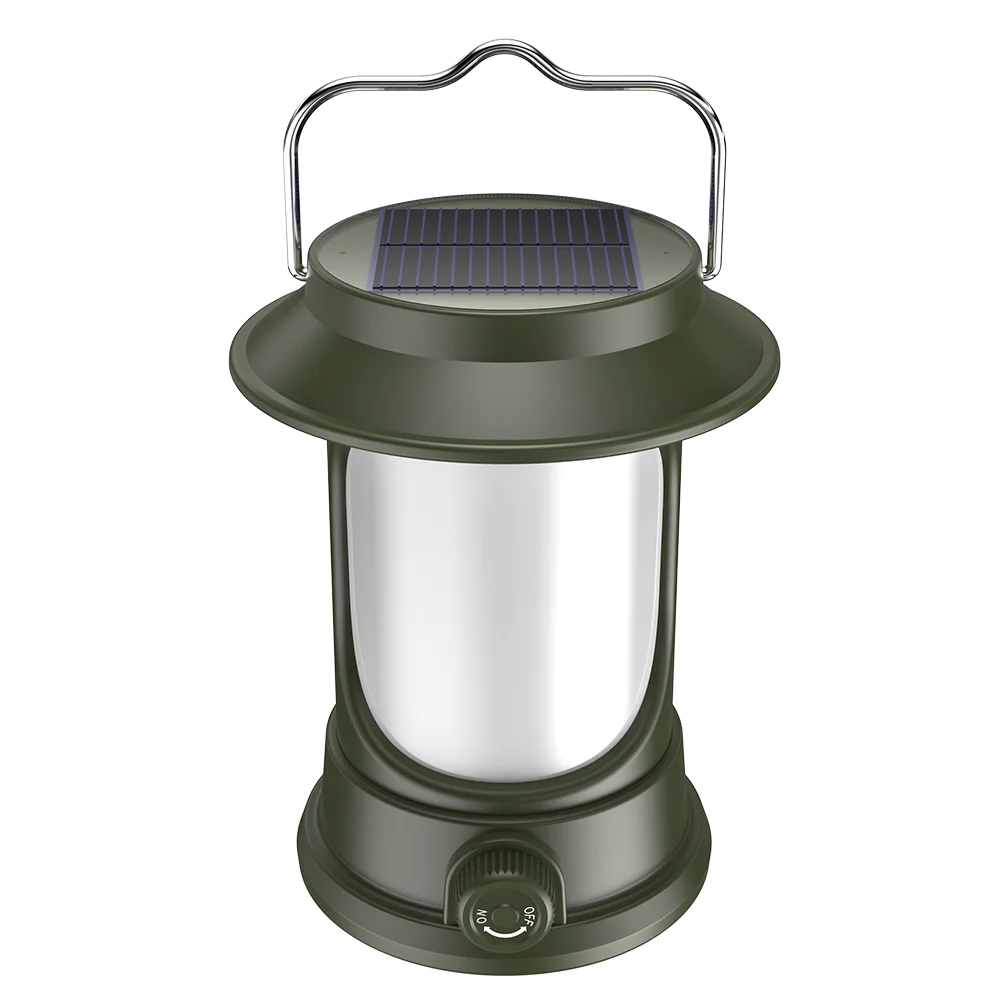
Outages have a habit of arriving at night, right when you're trying to find the candles and the fuse box at the same time. A rechargeable lantern that doesn't depend on the grid, or on a drawer full of dead batteries, makes the whole thing calmer. The Luna Solar Lantern charges in daylight and switches itself on at dusk, so it's already glowing when the lights go out.
4. Paper versions of the essentials
A few things are worth having in physical form, because they're useless as pixels when the screen won't load:
- A printed list of the phone numbers you'd actually call. Family, doctor, utility company, insurance.
- A small amount of cash, since card readers go down with the network.
- A paper map of your area, or at least a downloaded offline map on your phone.
- Passwords for a couple of critical accounts, written down and stored somewhere safe.
5. A two-line offline plan
Agree on a simple rule with your household. If the internet and phones are down, meet at a set place, or call instead of texting. Voice calls often still squeeze through a congested network when data doesn't. Thirty seconds of planning beats an hour of "where is everyone."
The 10-minute offline kit
If you want to be thorough without overthinking it, gather these in one drawer:
- A charged power bank
- A battery or hand-crank radio
- A rechargeable lantern or headlamp
- A printed contact list
- A small cash reserve
- An offline map or downloaded maps
- A spare charging cable
That's it. Nothing in that list expires, breaks the bank, or requires a prepper mindset. It's the boring, sensible version of preparedness, which is the only version that works.
For a deeper dive on the power-outage side of things, we covered a 24-hour emergency plan that pairs well with this one.
Frequently asked questions
How long do internet outages usually last?
Most are short, minutes to a few hours. Bigger incidents like cable cuts or widespread software failures can run for a day or more, and regional outages after storms can stretch into multiple days.
What's the most common cause of an internet outage?
Physical damage to infrastructure is the most common: cut cables, storm damage, power failures. After that come software failures, configuration errors, and cyberattacks like DDoS or ransomware.
What should I do first when the internet goes down?
Restart your router and check whether it's just you. Try another device, or ask a neighbor. If it's a wider outage, switch to your offline plan: keep devices powered, use a radio for news, and lean on SMS or voice calls for communication.
Do I really need to prepare for this, or is it just hype?
You don't need to prepare for the apocalypse. You need to prepare for a Tuesday. The power cuts, the router dies, the payment terminal goes down, and life goes on with a bit of friction. A charged power bank and a list of phone numbers on paper remove most of that friction.
You don't need to be ready for the end of the world. You need the boring stuff: power, light, a radio, and a piece of paper with a few numbers on it. Then the next time half the internet blinks out, it's an inconvenience instead of an emergency.